
July 15, 2021

How To Remove An Aerator From A Kitchen Faucet

Author

Update First Last in Content -> Business Text -> First Last field

Date

July 15, 2021

Share

It’s unlikely you have ever thought of the aerator at the tip of your kitchen faucet, and why would you. As with many other things in our home, we don’t think about some appliances or fixture parts until they stop working.

What is an aerator, and why is it in my kitchen faucet?

Kitchen Faucet Aerator

A kitchen faucet aerator is a part that fits at the end of your kitchen faucet. It is a small mesh screen that breaks up the flow of water into smaller streams and adds air in between them.
The aerators dilute the stream and significantly reduce the volume of water to conserve consumption and usage while at the same time maintaining the feel of a high-pressure flow. They also reduce splashing.
But, as we mentioned, we don’t think about them until they stop working. We’ll get to that in a moment.

Why Do Aerators On Kitchen Faucets Stop Working?

Aerators may become clogged with mineral deposits, leading to  low water  flow or an erratic stream. Cleaning an aerator is one of the simplest household fixes, though.
Our water supply has minerals, as well as particulates, that enter the water supply system in the ordinary course. Their presence is not a cause for alarm, except when they gather and deposit themselves in the fine mesh of the aerator. Water flow lessens, and streams become more diffuse.
As we said, though, it’s a pretty simple fix.

How To Remove The Aerator From A Kitchen Faucet Without Tools

Basically, aerators are either “outies” or “innies.” By that, we mean the aerator that affixes to the end of the faucet and the aerator that is recessed, or “cached,” into the faucet end.
The outer aerator screws onto the end of the faucet. You likely won’t need a wrench to attach it, as your hand is strong enough to screw it on as tight as it needs to be. The inner aerator was installed by a tool and then held in place by the ring cap that is hand-tightened at the end of the faucet.
To remove the former, you will usually be able to remove it by hand. To remove the latter, you’ll frequently need a special tool. Sometimes, though, they don’t cooperate, and a bit more than a simple hand turn is required. If you can’t turn the aerator by hand, put on a rubber glove to give yourself a better grip, and try again. 

How To Remove A Faucet Aerator That Is Stuck

If it’s still stuck, here are a few suggestions to help:
  • Lightly fasten a wrench around the aerator (the outie one) and give it a light turn. If it won’t cooperate, grab a hairdryer to heat the aerator a bit (heat causes the metal to expand), and give the wrench turn another try. Or,
  • Fill a cup with vinegar or a citric acid solution (diluted with water) and heat it in your microwave. Prop it up under the faucet so that the aerator’s threads are in the solution. Let it sit for an hour, periodically reheating it and lightly tapping the aerator to loosen the residue causing it to stick.

What about the “innie” aerator, the recessed or cached aerator? For that, you’ll need a faucet aerator removal tool. They are usually plastic, circular with teeth on one end and a grasp on the other. You insert the tooth end into the recess, find the notches on the aerator for the teeth to fit into, and give it a turn.
If you need to remove a recessed aerator without the special tool or key, try a flat head screwdriver. Find one of the notches on the aerator that the toothed key would fit into, and give it a push. Perhaps a tap or two will be sufficient to move it, and once loosened, it should come out easily. Again, if the threads have become mineralized, you might have to use the heated vinegar trick to loosen the aerator and then use the tool or screwdriver to turn it. These tools are available at most any plumbing supply store, hardware store, and the big online retail stores.

Cleaning An Aerator

Now that the aerator is out, let’s clean it. 
Soak the screen and other aerator parts in a vinegar or citric acid solution, diluted with water. This will help to dissolve mineral deposits that gummed up the threads. 
Leave the screen, etc., in the vinegar solution overnight. Any sediment deposits caught in the mesh screen are easily washed away by rinsing, and the vinegar solution can be used to rinse away any stubborn parts stuck to the mesh, along with a toothbrush.
Even so, aerators should be replaced from time to time to maintain peak performance. They are inexpensive, and as you can tell, easily installed and removed. Depending on the flow volume, aerators can conserve anywhere between 2 – 16 gallons of water per day.  As we said, an easy fix when needed. And an inexpensive item to replace every once in a while.
Source: https://www.mrkitchenfaucets.com/how-to-remove-an-aerator-from-a-kitchen-faucet/

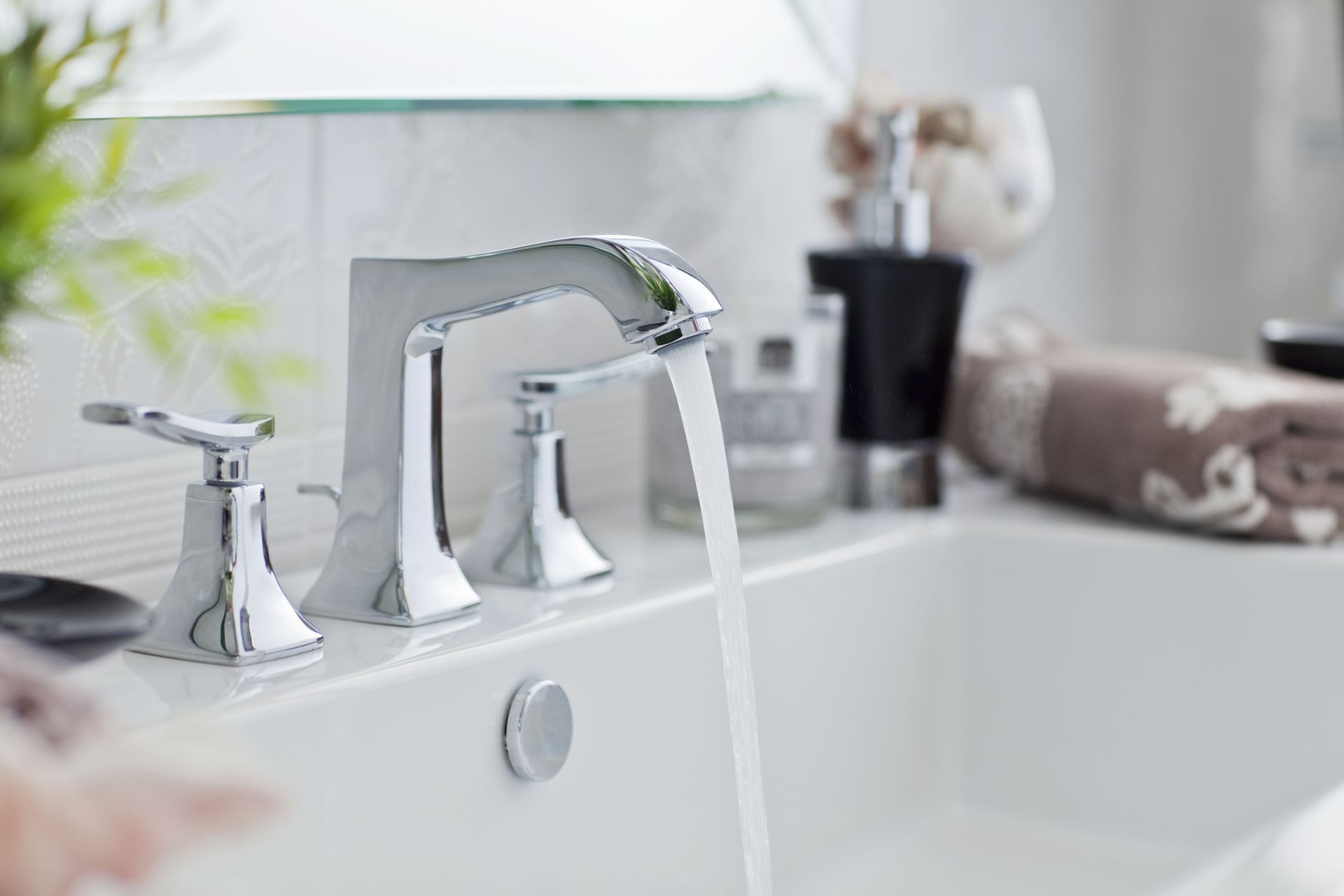
Chrome bathroom faucet with running water into a white sink.
October 17, 2025
Protect your older home’s charm and efficiency with expert plumbing contractors. Tim Rausch Plumbing LLC modernizes systems while preserving history.
Plumber repairs a bathroom sink, using a wrench.
June 17, 2025
If you have a plumbing inspection coming up, here's what you need to do to plan before your local plumbing contractor visits your home.
Plumber with wrench fixing a leaky pipe under a sink. Water is spraying.
July 22, 2024
When we ignore issues that need plumbing service, they often get to be much larger than what they originally were. Read on for what can happen!
Person using a wrench to work on plumbing under a kitchen sink.
February 13, 2024
Are you experiencing plumbing issues? Read more to identify the signs you need to call a professional plumbing contractor.

Bright white kitchen with a wooden island, stainless steel appliances, and gray walls.
September 27, 2022
A leaking refrigerator can feel like a drastic enough situation that you may think it's time to shop for a new fridge. But a leaking refrigerator doesn't necessarily mean that your fridge is on its way out .
Person plunging a white toilet with a black plunger.
September 27, 2022
An overflowing toilet is a relatively common problem that many people have had to deal with, but the commonality of this issue doesn't mean that it isn't a serious situation that needs to be handled quickly. The water from an overflowing toilet can soak into wood cabinetry, seep into the walls, or damage the floorboards, making it easier for mold, mildew, and rot to spread throughout the infrastructure of your home.
Hand turning dial on a washing machine, tools and level on shelf above.
September 27, 2022
A washing machine is an essential appliance to ensure that towels, linens, clothes, and bedding are regularly washed and sanitized. Whether you use a professional cleaner to launder your clothes, take laundry to a local laundromat, or use a personal washing machine in the comfort of your home, it's necessary for your personal hygiene to have clean clothes to wear to school, work, or when you meet up with friends.
Plumbing tools: shower head, faucet, valves, hoses, and sealing materials on a dark gray surface.
July 12, 2022
On the side or top of your water heater tank is a valve connected to a metal or plastic discharge tube pointing downward. The valve is called a T&P valve, or TPR valve, for "temperature and pressure relief."
Basement with white brick walls, open doors, water heater, and various pipes.
July 12, 2022
Boilers and water heaters are important to the heating and water supply operations of the home. While they provide different services to the house—one for space heating , the other for domestic water usage—there is some slight overlap in the form of combined boiler/heater devices.
Empty room with brick walls, two windows, and a shiny, wet concrete floor.
March 29, 2022
Most of the time, your home’s sump pump works efficiently and invisibly in the background. In areas with much groundwater, the sump pump's regular on and off sounds merge with the tapestry of your home life.

Show More