
August 19, 2021

Pros and Cons of Popular Bathroom Countertop Materials

Author

Update First Last in Content -> Business Text -> First Last field

Date

August 19, 2021

Share

Once upon a time, standard bathroom countertops were either ceramic tile, plastic laminate, or a material that was regarded as somewhat innovative for the time—so-called cultured marble. Cultured marble wasn't marble at all (or granite, or onyx), but instead was a dreary blend of crushed limestone held together with plastic resins. Thankfully, this early form of engineered stone has largely vanished in favor of products that look and perform much better. Laminates and ceramic tile, though, still remain as popular bathroom countertop materials, although today's versions don't look much like laminates and tile that you remember from your parents' or grandparents' homes. 
While it's possible to find a bathroom countertop made from a very unusual material, such as stainless steel or wood, most of today's bathroom countertops consist of one of these seven different materials. 

Laminate

If your vision of laminate countertops is that of the ugly, metal-edged laminates of yore, you need to spend a little time looking at new products from Formica, Wilsonart, or other top manufacturers. The look has evolved so much that laminates can fool you into thinking they are granite, wood, marble, leather, or even stainless steel.
Laminate countertops  are made from layers of plastic that are bonded to a particleboard (MDF) core to create a solid countertop surface. Countertops are available in stock pieces that can be cut and fit by anyone, or they can be custom-made by fabricators who can make a countertop to your specifications from a designer laminate, giving it custom edges and other designer features.
Pros
  • Laminates are a very inexpensive countertop material.
  • A huge range of colors and patterns is available.
  • Prefabricated countertops are very friendly to  DIY installation .

Cons
  • Custom styles are not DIY-friendly, requiring a custom fabricator.
  • Laminate countertops are lightweight, without the substantial "heft" of other materials.
  • Laminate is often regarded as a bargain, low-cost material.

Purchased off the shelf, prefabricated laminate countertop material costs $10 to $30 per square foot. Custom made by a fabricator, expect to pay $40 to $65 per square foot. Laminate countertops are best for guest bathrooms or powder rooms but are not the best choice for master baths or other places where style is important. They can also serve as a "quick fix" where you need to redecorate a bathroom quickly, such as when staging your home for sale.


Ceramic/Porcelain Tile

Ceramic, porcelain, or glass  tiles  are traditional countertop materials often seen in traditional decor, but they are also used in trendy, modern styles thanks to recent innovations, especially with porcelains.  Traditional ceramic tiles  are made of clay with a surface glaze; they are heated by fire to harden them. Porcelain is a type of ceramic that features finer clays fired under higher temperatures. Porcelain is a harder and denser material that is excellent for floors and countertops. Porcelain can authentically mimic other materials, such as wood or even leather, giving you many design options.
Although glass tiles are not technically ceramics, they are installed in much the same way as ceramic tile and offer even more design and style options.
Pros
  • Installing ceramic tile is a fairly easy DIY project.
  • Tile is relatively affordable among the "premium" countertop options.
  • Hundreds of design options are available.

Cons
  • Tile is brittle and may crack under impact.
  • Grout lines can easily stain and discolor, requiring  periodic cleaning  and resealing. 

Ceramic and porcelain tiles come in a wide range of costs, with materials alone running from less than a dollar per square foot to $200 or more for hand-crafted artisan tiles. In general, expect to pay $2 to $15 per square foot if you are installing your own tile countertop. For professional installation, costs are typically about $35 to $40 per square foot. 
Ceramic and porcelain tiles are a good choice where you want to save money on a quality countertop by doing the work yourself. 

Solid-Surface

Made from a blend of acrylic and polyester particles bonded together with resins,  solid surface countertop materials  are generally formulated to resemble stone and can be shaped into a variety of shapes, including all-in-one countertops with sink basins integrated into them. Dozens of different colors and styles are available from many manufacturers, including Corian, Silestone, Swanstone, and others. These newer generation "faux stone" countertops have largely replaced the so-called "cultured marble" plastic countertops that once dominated the bathroom countertop market. Once regarded as a premium building material, solid-surface now occupies a middle tier between laminate at the lower end, and natural stone and quartz at the upper end. 
Pros
  • Solid-surface material can be shaped into seamless countertops that include integrated sink basins.
  • Material is easy to care for, resists stains, and can be easily repaired by sanding. 
  • Coloring and pattern are very consistent—there is no problem matching pieces

Cons
  • The "stone-look" appearance is somewhat artificial—the look is less elegant than natural stone. 
  • DIY options are limited - solid surface materials can be difficult to find for sale to homeowners. 
  • Solid-surface material can scorch under the heat of curling irons. 

Solid surface materials typically cost $45 to $75 per square foot, fabricated and installed to your specifications. These countertops are excellent in heavy-use bathrooms, such as those used by children. They can also be a good choice where you want a quick solution to redecorating a bathroom in preparation for a home sale. 

Natural Stone

Natural stone  of all types is regarded as a step above ceramic or porcelain tile as a countertop material. Many different types of stone are used, including slate, soapstone, limestone, travertine, marble, onyx, and granite. A natural stone bathroom countertop usually consists of a thick solid slab with openings cut for the sinks, but stone countertops can also be created with tiles laid in much the same fashion as ceramic tile countertops. Each type of stone has its own set of pros and cons.
  • Slate : This is a good hard countertop material that resists stains once sealed. Colors are uniform shades of gray, black, or green. Costs range from $50 to $75 per square foot for solid slabs.
  • Soapstone : A milky stone with subtle veining. Colors are typically shades of white or gray. This is another non-porous stone that is easier to care for than granite or marble. Solid slab countertops typically cost $70 to $100 per square foot.
  • Limestone/travertine : Somewhat rare for bathrooms, limestone and its close relative, travertine, are relatively porous stones that need to be carefully and repeatedly sealed when used in countertops. Although slabs can be purchased, many limestone or travertine countertops are made from tiles. Costs for slab countertops run $60 to $80 per square foot. 
  • Marble : A heavily veined metamorphic stone, marble is one of the most beautiful of all natural stones, available in an almost infinite variety of colors and patterns. Marble is a relatively soft, porous stone that needs to be sealed every year or two. Solid slab marble countertops typically cost $100 to $200 per square foot, but they offer an elegance unmatched by other countertop materials.
  • Granite : Although similar to marble,  granite  is more likely to have flecks of varying colors in it, with less veining than is seen with marble. Granite is the most popular natural stone for countertops, thanks to its availability and diversity. Slab countertops typically cost $75 to $175 per square foot.

Pros
  • Natural stone is a premium building material that sends a message of luxury. 
  • Granite and marble countertops are entirely unique, with no two countertops looking alike.

Cons
  • Most natural stone requires period sealing and more maintenance when compared to ceramic tile and engineered stone. 
  • Stone is considerably more expensive than many other countertop materials. 

Opt for natural stone whenever you want your bathroom to send a message of luxury. Natural stone is a good choice for a master bath, but may not be suitable for family baths that get lots of use. 


Concrete

Although it might not be your first choice for a countertop surface, concrete has become a very popular trend in countertops. As a countertop material, concrete is not the rough gray slab found in sidewalks but is more typically a stained, highly polished surface that may even be texturized. Some installers even embed tile, stone, or bits of polished glass into the surface during fabrication.
Pros
  • Concrete is a very "on-trend" countertop material—it is usually a strong selling point for a home. 
  • Countertops are very durable and strong.

Cons
  • There is no DIY option—concrete countertops must be fabricated and installed by pros. 
  • Repair is not usually an option—if cracks do occur, the only option is a replacement.
  • Countertops require a specialized contractor familiar with fabricating them. 

Concrete countertops  are one of the more expensive options—expect to pay $75 to $150 per square foot, fabricated and installed. They are a good choice where you want to make a special design statement, and can also serve well for heavy-use family bathrooms. 

Crushed Glass

Countertops made of crushed glass are a relatively new introduction, but they are steadily becoming more popular. These countertops are made from recycled crush glass embedded in either clear acrylic or concrete. These uniquely beautiful countertops are striking to look at, and they lend a bathroom a trendy designer appeal. Because they are typically custom fabricated, no two crushed glass countertops look the same. They can be either traditional in appearance, or extremely modern, depending on the glass used in them.
Pros
  • These are tough, strong countertops, especially those formulated with acrylic. 
  • Acrylic-based types are very easy to clean.
  • A wide variety of looks are available.

Cons
  • Types using concrete can be brittle.
  • Where cracks appear (more likely with concrete), the countertops cannot be repaired.
  • Concrete types can be easily stained if they are not periodically sealed.

Crushed glass countertops  typically cost $50 to $100 per square foot, installed. They are best reserved for upper-end bathrooms where style is important.

Quartz

Quartz countertops are not solid quartz but are instead an engineered stone product made from 70 to 90 percent ground-up quartz and other stone minerals, blended with resins and pigments and shaped into countertop slabs. A variety of styles are available, some of which are nearly indistinguishable from natural stone slabs. These countertops are often sold with integrated sink basins built into them. Major manufacturers of quartz countertops include Dupont Zodiaq and Cambria. 
Pros
  • Engineered quartz can be formed into many shapes, such as countertops with integrated sink basins. 
  • Many colors and styles are available.
  • The coloring is more uniform than with natural stone. 
  • These countertops are stronger and less brittle than natural stone slab countertops.
  • Because they are less porous than natural stone, quartz countertops are more stain-resistant.

Cons
  • These are among the more expensive countertops.
  • Seams are sometimes visible.
  • Engineered quartz is not as heat-resistant as natural stone. 

Quartz countertops  typically cost between $115 and $200 per square foot. They are best used in bathrooms where a contemporary styling is desired, but they can also work well in heavy-use family bathrooms.   So urce: https://www.thespruce.com/bathroom-countertop-materials-1821381

Chrome bathroom faucet with running water into a white sink.
October 17, 2025
Protect your older home’s charm and efficiency with expert plumbing contractors. Tim Rausch Plumbing LLC modernizes systems while preserving history.
Plumber repairs a bathroom sink, using a wrench.
June 17, 2025
If you have a plumbing inspection coming up, here's what you need to do to plan before your local plumbing contractor visits your home.
Plumber with wrench fixing a leaky pipe under a sink. Water is spraying.
July 22, 2024
When we ignore issues that need plumbing service, they often get to be much larger than what they originally were. Read on for what can happen!
Person using a wrench to work on plumbing under a kitchen sink.
February 13, 2024
Are you experiencing plumbing issues? Read more to identify the signs you need to call a professional plumbing contractor.
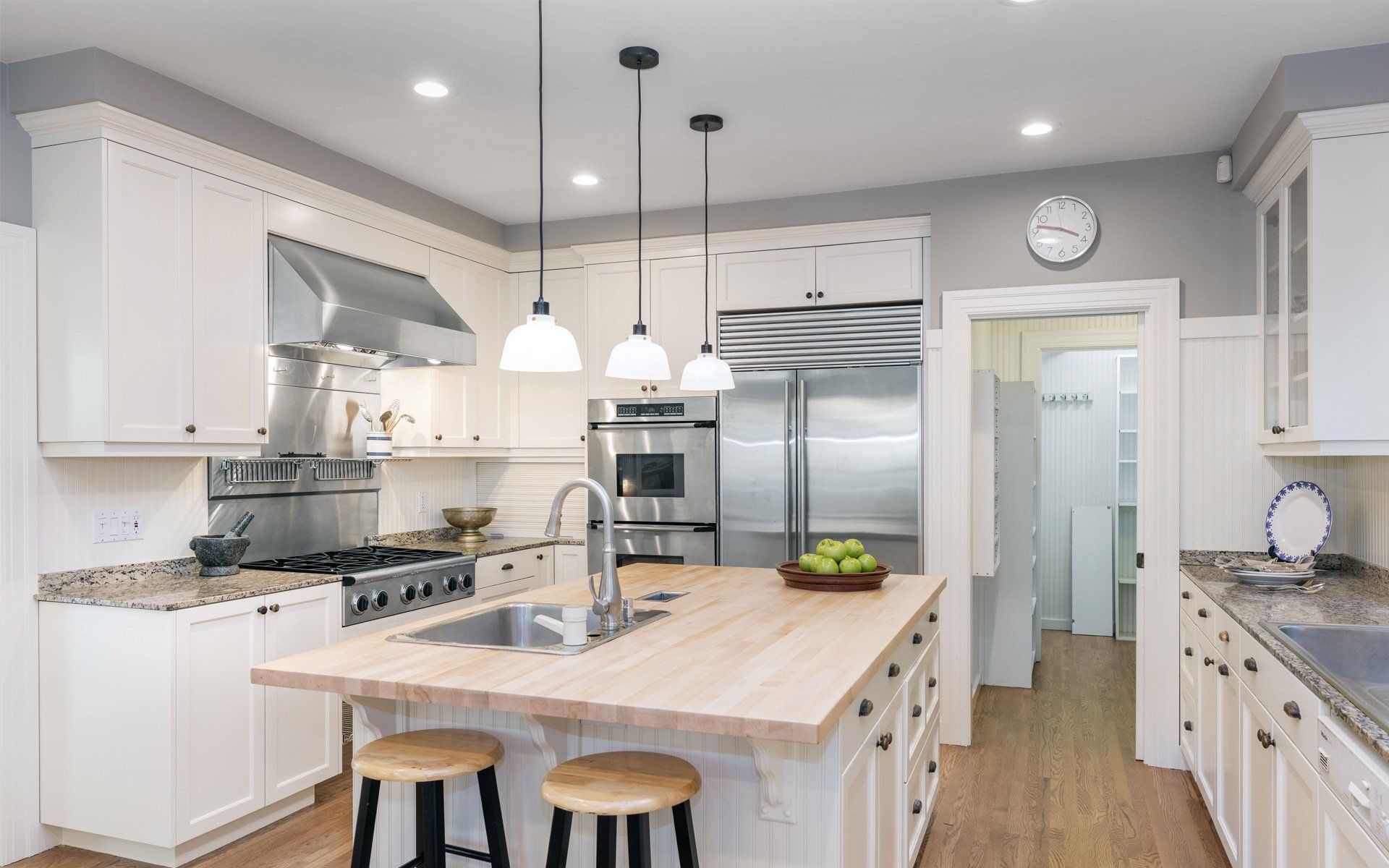
Bright white kitchen with a wooden island, stainless steel appliances, and gray walls.
September 27, 2022
A leaking refrigerator can feel like a drastic enough situation that you may think it's time to shop for a new fridge. But a leaking refrigerator doesn't necessarily mean that your fridge is on its way out .
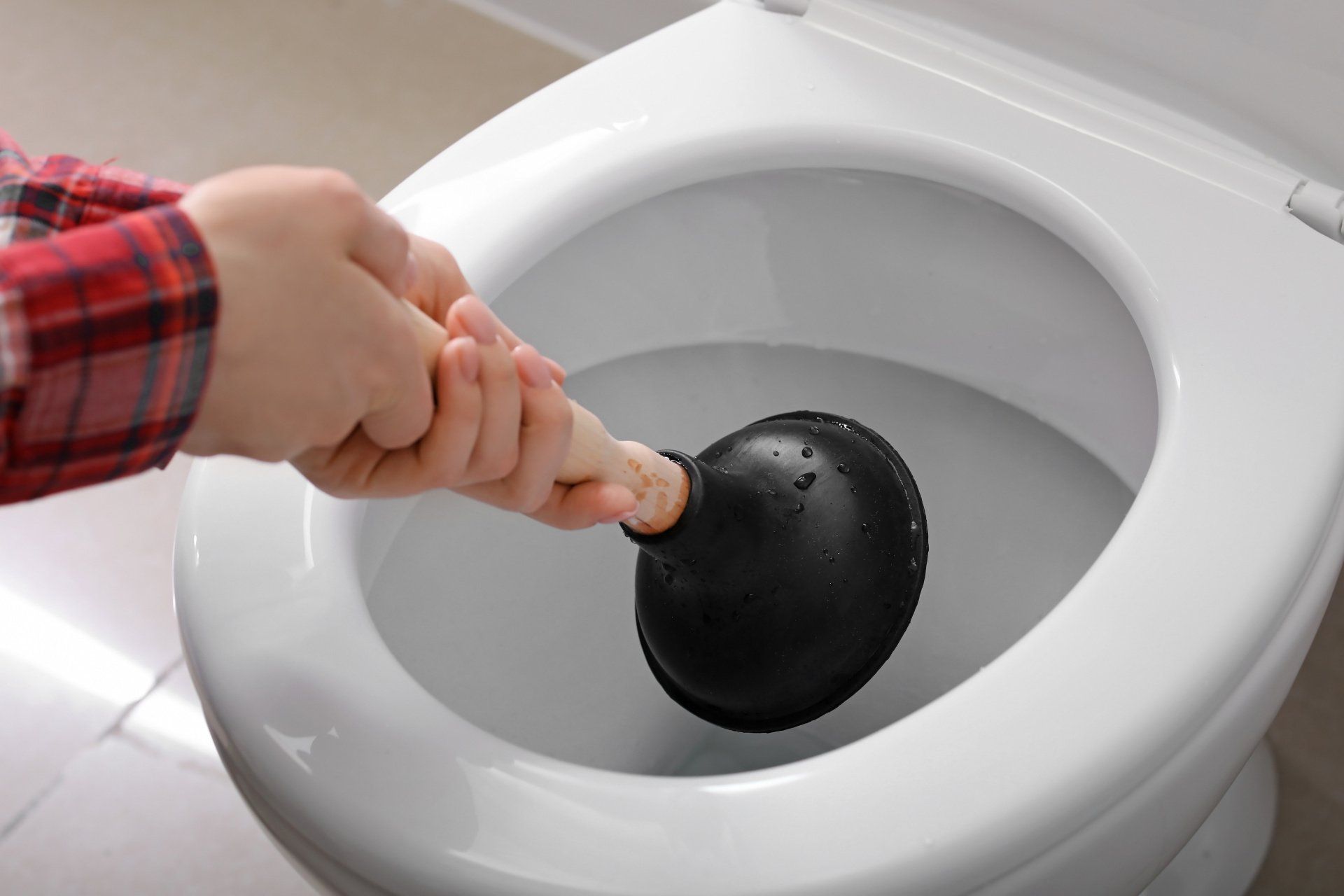
Person plunging a white toilet with a black plunger.
September 27, 2022
An overflowing toilet is a relatively common problem that many people have had to deal with, but the commonality of this issue doesn't mean that it isn't a serious situation that needs to be handled quickly. The water from an overflowing toilet can soak into wood cabinetry, seep into the walls, or damage the floorboards, making it easier for mold, mildew, and rot to spread throughout the infrastructure of your home.
Hand turning dial on a washing machine, tools and level on shelf above.
September 27, 2022
A washing machine is an essential appliance to ensure that towels, linens, clothes, and bedding are regularly washed and sanitized. Whether you use a professional cleaner to launder your clothes, take laundry to a local laundromat, or use a personal washing machine in the comfort of your home, it's necessary for your personal hygiene to have clean clothes to wear to school, work, or when you meet up with friends.
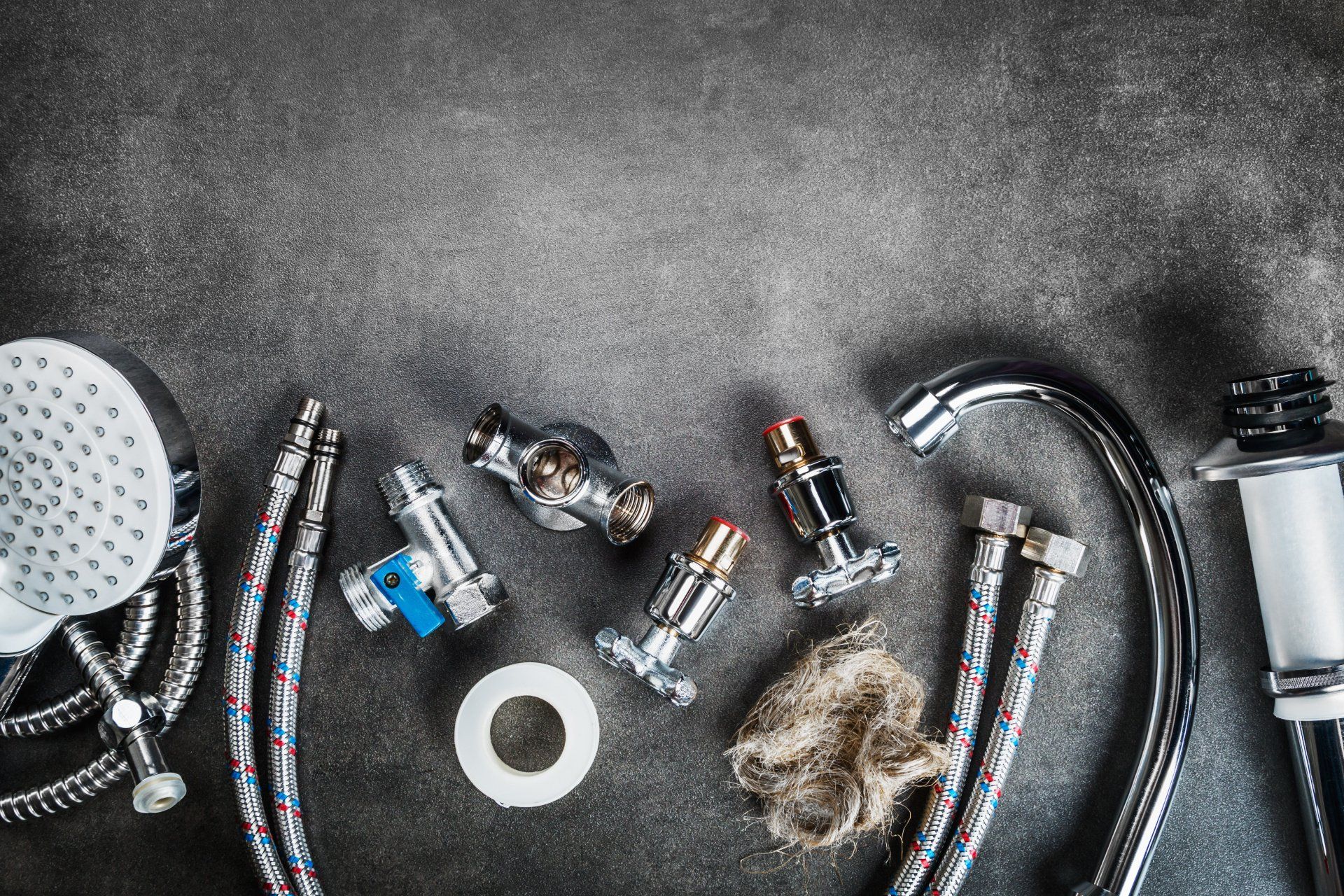
Plumbing tools: shower head, faucet, valves, hoses, and sealing materials on a dark gray surface.
July 12, 2022
On the side or top of your water heater tank is a valve connected to a metal or plastic discharge tube pointing downward. The valve is called a T&P valve, or TPR valve, for "temperature and pressure relief."
Basement with white brick walls, open doors, water heater, and various pipes.
July 12, 2022
Boilers and water heaters are important to the heating and water supply operations of the home. While they provide different services to the house—one for space heating , the other for domestic water usage—there is some slight overlap in the form of combined boiler/heater devices.
Empty room with brick walls, two windows, and a shiny, wet concrete floor.
March 29, 2022
Most of the time, your home’s sump pump works efficiently and invisibly in the background. In areas with much groundwater, the sump pump's regular on and off sounds merge with the tapestry of your home life.

Show More